A warm welcome to Molly as he makes his debut as a Monstress-wannabe.
(Thanks, Molly - you submit this offering on the very day I tell the teen that of course she can have a kitten for Christmas.)
In 1997, Karen Allen, a PhD at the University Of Buffalo, studied 48 New York City stockbrokers being treated for hypertension, all of whom had lived alone for more than five years. She found that the 24 participants selected at random to have a cat or dog introduced to their lives showed far reduced levels of hypertension during stressful situations than the 24 participants in the non-pet-owning control group.
‘This study shows that if you have high blood pressure, a pet is very good for you when you're under stress, and pet ownership is especially good for you if you have a limited support system,’ Allen said.
This is but one example of the myriad of studies undertaken on the benefits of pet ownership.
After 11 years of living alone and being nagged by friends (mainly The Monstress) about getting a pet because it would be good for me, I finally succumbed and acquired a furry child in the form of a small grey kitten.
What studies, such as Professor Allen’s, fail to highlight is the demonic side of your average pet.
The following is one such example, which I’m sure would have had a significant portion of her study group trying the windows on the New York Stock Exchange.
One Friday, I was awoken about 3am by the furry child making a racket. He was suitably chastised, but did he take this as a sign that Daddy wanted to sleep? Sadly, no.
I used all my self control to ignore him and, sure enough, he lost interest and went away.
I then heard, through the darkness, the sound of him scratching in his litter tray.
‘Ah,’ I thought, ‘that’s what he wanted. How can I be mad at him for that?’
What I heard next defies description. The best analogy I can give is the sound that a bottle of dishwashing liquid makes when you squeeze the last of its contents out. This got my attention as thoughts of emptying the litter tray first thing when I got up began to pervade my mind and I heard ‘scratch, scratch, scratch’ ringing once again through the night.
The furry child reappeared at the foot of my bed and proceeded to walk up onto my pillows and over my face, purring in a way that seemed to say, ‘See how you like this!’ Light on, examination of the bedding, no little marks, no smell… Sleep overcame me, again.
Move forward another three hours and it’s time to deal with that litter tray. I’m faced with a substance that’s the consistency of melted ice-cream (but does not smell like ice cream!). Now, despite the fact he has a litter tray the size of an Olympic swimming pool, it would appear he stood in the middle, parked his business end over the edge, and sprayed this mess all over my floor and partly up one of the internal doors.
Rubber gloves, paper towel and every last scrap of self control to suppress the gag reflex saw the unholy mess cleaned up and the offensive material bagged and placed by the front door to be deposited into the garbage bin.
I was driving to work and had just crossed the flannelette curtain that separates the northern suburbs from the civilised world, when I suddenly realised, ‘Bugger – I forgot to put that bag in the rubbish bin.’
At the end of the working day, I got home, dropped off the car and headed off to a social function with no thought of the bag.
I returned home several hours later and, remembering the rubbish, went to put that bag out. But it wasn’t there. I checked the bin – not there. In my slightly inebriated state, I tried to recount my movements that morning and afternoon. While doing this, I walked into my bedroom, the only room in my house with carpet.
The shredded remains of the plastic bag and its contents were strewn across my bedroom floor. The furry child had somehow dragged this bag 10 metres from the front door to my bedroom at the back of the house and proceeded to rip it open for me to enjoy AGAIN.
So, I was forced to don the rubber gloves and clean it up a second time. Had I a spade at that moment, I would have dug a hole in the back yard and buried it deep – along with the cat…deep, deep underground so it may never have appeared again.
And so, Professor Allen, if you’re going to undertake a study on the benefits of pet ownership, don’t sanitise it – tell the whole bloody story. Pets are not the cute, furry all-loving-and-good-for-you things you espouse. Cross them and you will discover, to your peril, that they really are – demons with paws.
Showing posts with label Animals. Show all posts
17 October 2010
05 October 2010
20 things you never wanted to know about giraffes
The giraffe is my daughter’s and my mother’s favourite animal. This lofty feat of natural engineering is simulatneouslty stunning and ridiculous. Here are 20 facts about the giraffe:
1. The Egyptian hieroglyph for giraffe means ‘to prophesy’ or ‘to foretell’. Experts believe the animal was given this hieroglyph because of its acute eyesight.
2. An adult giraffe’s purplish black tongue is prehensile and measures 67 centimetes.
3. While giraffes are often silent, they are not mute. They can make bleating and bellowing noises that we can hear and also make sounds at frequencies not audible to us.
4. Ola Helland, a 25-year-old web designer, was out drinking when his friend, Jørgen, refused to believe that Ola could collect a million giraffes by the end of 2010, but Ola proved him wrong.
5. Each giraffe has a unique coat pattern.
6. The giraffe has seven vertebrae in its neck, just like most other mammals.
7. Giraffes have elastic blood vessels in their necks to help them lean their heads down to drink. If they didn’t they’d pass out each time they tried to get water from a stream.
8. If you dream about a giraffe it means you need to consider the big picture. The dream may also be a metaphor for how you are ‘sticking your neck out’ for someone. If you’re riding a giraffe, you want attention, but aren't getting it.
9. Giraffes have no tear ducts – but people have seen them cry.
10. Even though they appear lanky, a giraffe's legs are very powerful and a single kick can decapitate a lion.
11. The Toys ‘R’ us giraffe mascot is called Geoffrey.
12. A giraffe eats about 64 kilos of foliage a day.
13. A giraffe's favorite food is the thorny acacia tree and some seeds germinate only after passing through the giraffe's digestive tract.
14. Giraffe’s have antiseptic saliva that helps thorn-inflicted wounds on their tongues to heal quickly.
15. Last year, police in Oregon, USA, saw drunken Sean McDowell, 24, pick up a 1.3 metre tall toy giraffe outside a shop and simulate sex with it. Twice. Maybe he had struck out with all the women at the bar and this giraffe was looking pretty good.
16. Giraffes sleep for between 20 minutes and two hours a day.
17. There are nine giraffe species.
18. In Africa you can still find giraffe meat on some menus (for example, red wine giraffe steak with tomatoes and fresh herbs).
19. Giraffes don’t bathe.
20. If you want to catch a giraffe, don’t chase it for too long or it will have a heart attack, due to its high blood pressure.
Image: Gidion Lubbe
1. The Egyptian hieroglyph for giraffe means ‘to prophesy’ or ‘to foretell’. Experts believe the animal was given this hieroglyph because of its acute eyesight.
2. An adult giraffe’s purplish black tongue is prehensile and measures 67 centimetes.
3. While giraffes are often silent, they are not mute. They can make bleating and bellowing noises that we can hear and also make sounds at frequencies not audible to us.
4. Ola Helland, a 25-year-old web designer, was out drinking when his friend, Jørgen, refused to believe that Ola could collect a million giraffes by the end of 2010, but Ola proved him wrong.
5. Each giraffe has a unique coat pattern.
6. The giraffe has seven vertebrae in its neck, just like most other mammals.
7. Giraffes have elastic blood vessels in their necks to help them lean their heads down to drink. If they didn’t they’d pass out each time they tried to get water from a stream.
8. If you dream about a giraffe it means you need to consider the big picture. The dream may also be a metaphor for how you are ‘sticking your neck out’ for someone. If you’re riding a giraffe, you want attention, but aren't getting it.
9. Giraffes have no tear ducts – but people have seen them cry.
10. Even though they appear lanky, a giraffe's legs are very powerful and a single kick can decapitate a lion.
11. The Toys ‘R’ us giraffe mascot is called Geoffrey.
12. A giraffe eats about 64 kilos of foliage a day.
13. A giraffe's favorite food is the thorny acacia tree and some seeds germinate only after passing through the giraffe's digestive tract.
14. Giraffe’s have antiseptic saliva that helps thorn-inflicted wounds on their tongues to heal quickly.
15. Last year, police in Oregon, USA, saw drunken Sean McDowell, 24, pick up a 1.3 metre tall toy giraffe outside a shop and simulate sex with it. Twice. Maybe he had struck out with all the women at the bar and this giraffe was looking pretty good.
16. Giraffes sleep for between 20 minutes and two hours a day.
17. There are nine giraffe species.
18. In Africa you can still find giraffe meat on some menus (for example, red wine giraffe steak with tomatoes and fresh herbs).
19. Giraffes don’t bathe.
20. If you want to catch a giraffe, don’t chase it for too long or it will have a heart attack, due to its high blood pressure.
Image: Gidion Lubbe
12 August 2010
Talking turkey
Last night, my daughter gleefully told me that turkeys are so dumb that that during a rainstorm, they will stare up at the sky and forget to breathe, allowing their nostrils to fill up with water, so they drown. Sorry to disappoint, Miss Went, but scientists say this is a myth.
She also told me that turkeys are so dumb, farmers have to dye their food green or they don’t know it’s edible (the turkeys, not the farmers). I can’t find any evidence to support or refute this.
Three things that are true about turkeys:
1. Benjamin Franklin wanted to make the wild turkey, not the bald eagle, the national bird of the United States. (There’s got to be something wrong with eating your national symbol, Ben.)
2. For their first meal on the moon, astronauts Neil Armstrong and Buzz Aldrin ate roast turkey in foil packets.
3. Big Bird (from Sesame Street) is dressed in a costume of 4,000 white turkey feathers (dyed yellow).
Image: Tom Curtis
She also told me that turkeys are so dumb, farmers have to dye their food green or they don’t know it’s edible (the turkeys, not the farmers). I can’t find any evidence to support or refute this.
Three things that are true about turkeys:
1. Benjamin Franklin wanted to make the wild turkey, not the bald eagle, the national bird of the United States. (There’s got to be something wrong with eating your national symbol, Ben.)
2. For their first meal on the moon, astronauts Neil Armstrong and Buzz Aldrin ate roast turkey in foil packets.
3. Big Bird (from Sesame Street) is dressed in a costume of 4,000 white turkey feathers (dyed yellow).
Image: Tom Curtis
17 July 2010
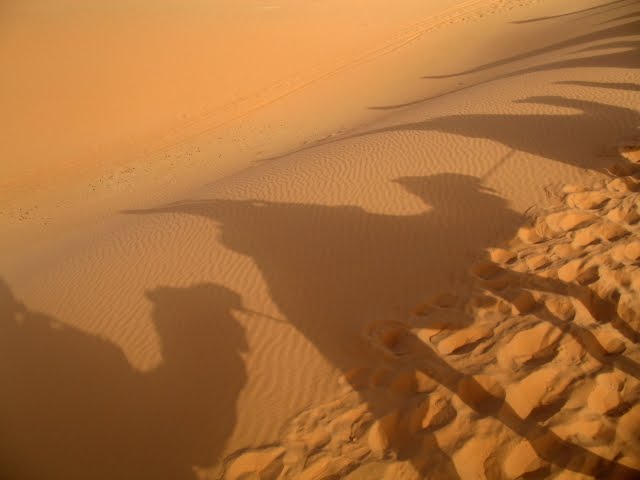
20 things you never wanted to know about camels

1. Forty to fifty million years ago, camels were the size of rabbits and lived in forests in North America.
2. Humans domesticated camels about 5,000 years ago.
3. There are 17 million camels worldwide – 90% are dromedaries (the ones with one hump).
4. In scorching heat, a camel can go for 17 days without drinking.
5. A rat can last longer without water than a camel, and so can a giraffe.
6. You’ve heard camels called the ‘ships of the desert’, well, they can actually swim.
7. Camels have a reputation for spitting but they don't (it would be a waste of water). What they are actually doing is vomiting on you.
8. Camels never run, they just walk faster.
9. A camel has 34 teeth.
10. Despite the hump, a camel’s spine is straight.
11. Want to remember the difference between dromedaries and bactrians? Take the first letter in their names, make it a capital and drop it onto its flat side. The ‘D’ in dromedary has only one hump. The ‘B’ in bactrian has two humps.
12. A camel's poop is so dry you can use it immediately to start a fire.
13. Camels can eat thorny twigs without hurting their mouths but they avoid stony deserts, which hurt their feet.
14. Baby camels (calves) are born without humps.
15. Camels live until they’re about 50.
16. Camels can be milked, but the flavour is an acquired taste. Camel milk doesn’t curdle.
17. To combat sand, camels have three eyelids, two layers of eyelashes and can close their nostrils.
18. A camel can drink about 200 litres of water in a day.
19. There are over 160 words for ‘camel’ in the Arabic language.
20. Abdul Kassem Ismael, Grand Vizier of Persia in the tenth century, carried his library with him wherever he went. The 117,000 volumes were carried by 400 camels, which were trained to walk in alphabetical order.
Image: m_bartosch
Subscribe to:
Posts (Atom)